
Dealing with comorbid mental health disorders creates challenges that are unique to every case and every client. Though trauma disorders and anxiety disorders are different, they often intertwine in ways that heavily influence a patient’s symptoms and experiences. Understanding both of these mental health disorders separately and together is necessary to find lasting healing from these experiences.
Exploring the relationship between anxiety and trauma involves looking at the shared symptoms, risk factors, behaviors, and complications of comorbid trauma disorders and anxiety disorders. In doing so, Licensed Clinical Psychologists can develop a deeper understanding of how trauma and anxiety intertwine across a client’s mental health journey. Read on to learn more about how anxiety and trauma interact and why understanding both is the key to mental health treatment.
Defining Trauma and Anxiety
Traumatic experiences can overwhelm your thoughts, emotions, and cognitive processes and leave a lasting impact on the mind and body. For some people, trauma can be the result of violent experiences such as assault, abuse, or natural disasters. Other people may face emotional trauma rooted in neglect, bullying, emotional abuse, or the loss of a loved one.
Anxiety, on the other hand, involves perpetual feelings of fear, dread, and worry. Like trauma, anxiety affects the way you perceive and react to real or imagined threats. Both trauma disorders and anxiety disorders involve intense feelings of fear and unease that manifest in physical, mental, and emotional distress. This is what makes the relationship between them so significant.
The Lasting Effects of Trauma
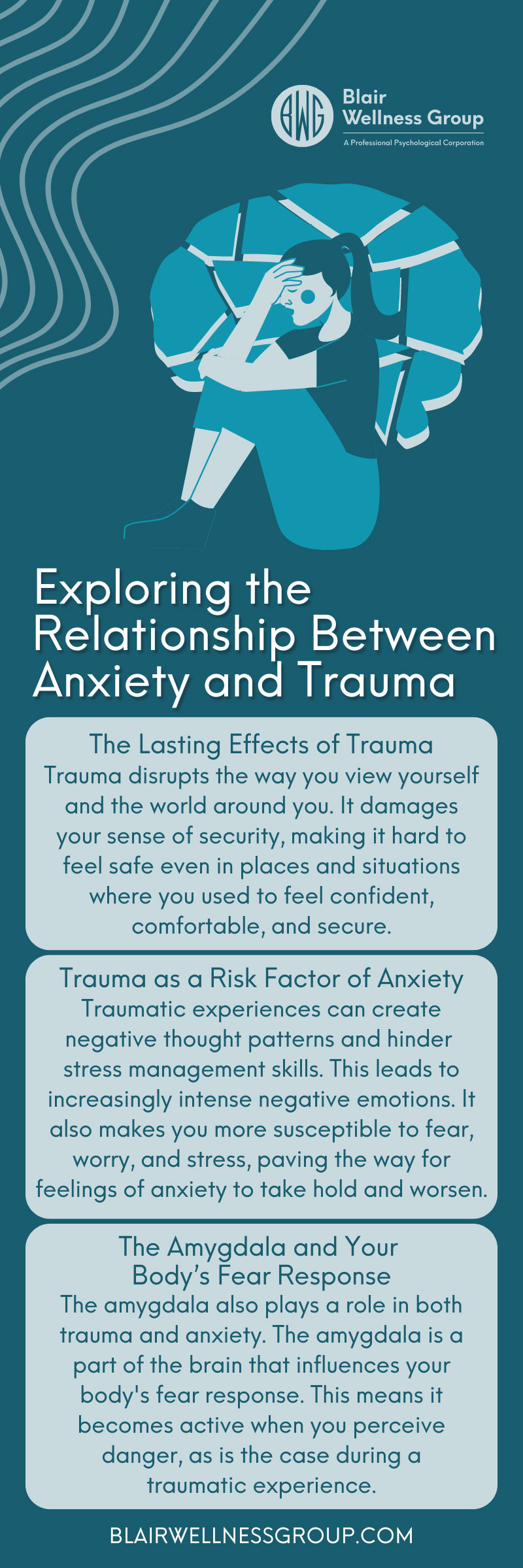
The lasting effects of trauma can lead to the development or worsening of other mental health disorders, including anxiety. Trauma disrupts the way you view yourself and the world around you. It damages your sense of security, making it hard to feel safe even in places and situations where you used to feel confident, comfortable, and secure.
This lack of safety and comfort creates a persistent source of stress and overwhelms your thoughts, emotions, and senses. As a result, trauma has a lingering negative impact on your memory, thought patterns, emotions, self-image, and more. Additionally, trauma triggers, such as sounds, smells, places, and people, can affect your work, relationships, and other aspects of daily life.
Trauma as a Risk Factor of Anxiety
All these effects of trauma act as sources of stress, worry, and fear—emotions that are closely tied to anxiety. As these negative experiences worsen and become more persistent, they can develop into anxiety disorders. This makes trauma one of the most common risk factors of anxiety disorders.
Furthermore, trauma hinders your ability to process negative experiences and emotions. Traumatic experiences can create negative thought patterns and hinder stress management skills. This leads to increasingly intense negative emotions. It also makes you more susceptible to fear, worry, and stress, paving the way for feelings of anxiety to take hold and worsen.
Post-Traumatic Stress Disorder
Trauma is a risk factor for any type of anxiety disorder, but the one that comes to mind first for many people is Post-Traumatic Stress Disorder (PTSD). PTSD is an anxiety disorder that develops after a traumatic experience. PTSD shares many symptoms with other anxiety disorders, such as difficulty concentrating, chronic tension, agitation or irritability, and trouble sleeping. However, individuals with PTSD also experience intrusive thoughts and memories about the traumatic event, distorted patterns of thinking surrounding the experience, and other unique symptoms.
It is impossible to treat PTSD without addressing the relationship between anxiety and trauma. Understanding how both mental health conditions influence PTSD allows patients to better recognize where their symptoms come from, how they interact, and how a Licensed Clinical Psychologist can help them heal from their experiences.
The Amygdala and Your Body’s Fear Response
The amygdala also plays a role in both trauma and anxiety. The amygdala is a part of the brain that influences your body’s fear response. This means it becomes active when you perceive danger, as is the case during a traumatic experience.
However, trauma can cause the amygdala to become overactive, which leads to hypervigilance and causes you to feel constantly alert and on edge. Hypervigilance is associated with both trauma disorders and anxiety disorders. It creates a persistent source of stress and can cause you to feel irritable, jumpy, or mistrustful of people around you.
Hypervigilance and the amygdala’s exaggerated fear response can occur even when you are not in danger. This increased level of fear or worry contributes to Generalized Anxiety Disorder and other anxiety disorders.
Maladaptive Behaviors Stemming From Trauma and Anxiety
Both trauma disorders and anxiety disorders can cause you to turn to avoidance, numbing behaviors, substance abuse, and other maladaptive coping behaviors. As with many Mental Health Disorders, these behaviors seem to provide temporary relief from the negative thoughts and emotions of anxiety and trauma.
In reality, though, maladaptive behaviors distract you from the issue and hinder your ability to truly process your experiences. This often prevents people from seeking professional intervention and evidence-based treatment from a Licensed Clinical Psychologist.
Other Challenges With Treatment
Like many comorbid mental health disorders, trauma and anxiety create a negative cycle with each other. The hypervigilance and consistent feelings of fear associated with anxiety often heighten the effects of trauma, making it harder to process your experience and heal. Meanwhile, the lingering fear and worry associated with unresolved exacerbates anxiety and its symptoms.
If you attempt to treat trauma without simultaneously addressing anxiety, or vice versa, you cannot achieve lasting positive change. The two conditions are intertwined and require equal attention and treatment to overcome.
Healing With a Licensed Clinical Psychologist
Dr. Blair is an Anxiety Psychologist in Los Angeles who has experience addressing and treating the unique intersection of anxiety disorders and trauma disorders. If you are looking for mental health treatment from a Licensed Clinical Psychologist in Irvine, Beverly Hills, Newport Beach, Bel Air, Century City, Brentwood, Westwood, Huntington Beach, Mission Viejo, Aliso Viejo, and the surrounding areas, contact Blair Wellness Group to see how our evidence-based treatment plans can help you.

Dr. Cassidy Blair is a renowned Licensed Clinical Psychologist and trusted Performance Coach who specializes in providing Concierge-Psychological Care and Executive Coaching for high-achieving professionals. With a deep understanding of the unique challenges faced by CEOs, executives, entrepreneurs, and leaders, Dr. Blair offers tailored, confidential care designed to foster emotional well-being, personal growth, and professional excellence. Her clientele values her discretion, clinical expertise, and emotionally intelligent approach to navigating complex personal and professional dynamics.