
Everyone wants to feel proud of and satisfied with their work. Regardless of your career, it is vital to feel that your work is valuable and important in your life. But what happens when you start to feel stuck in your career?
It is not uncommon to experience feelings of uncertainty or stress with your job, but when those feelings become more prevalent than the job itself, you start to have issues. Feeling stuck in your career can lead to feeling stuck in your entire life. You might wonder where you are, what you want, and who you wish to be. These questions are important, but they can become incredibly stressful if you face them alone.
That is why many professionals turn to life coaches or therapists for help when their careers start to feel stagnant. Discover how therapy helps executives who are stuck in their careers—and how it can help you with your professional path—with this overview.
Analyze Professional Values and Desires
If you are feeling stuck in your career, you need to take some time to ask yourself what you really want. What values do you prioritize in your personal and professional life? What exactly do you look for in a dream job? Sometimes, you can work so hard pursuing career opportunities that you do not realize you have strayed from your intended path. This is a hard thing to face, but a therapist or life coach can help you assess the situation and determine what to do next. This kind of support helps you make smart decisions that positively impact you and your career.
Improving Interpersonal Skills
Whether you are collaborating with colleagues, directing teams, or networking beyond your business, you cannot have a successful career without working with others. That is why interpersonal skills are a critical part of a productive, satisfying, and healthy professional life. Workplace conflict can harm your productivity, ruin your motivation and enjoyment of the job, and make you wonder if this stage of your career is worth it.
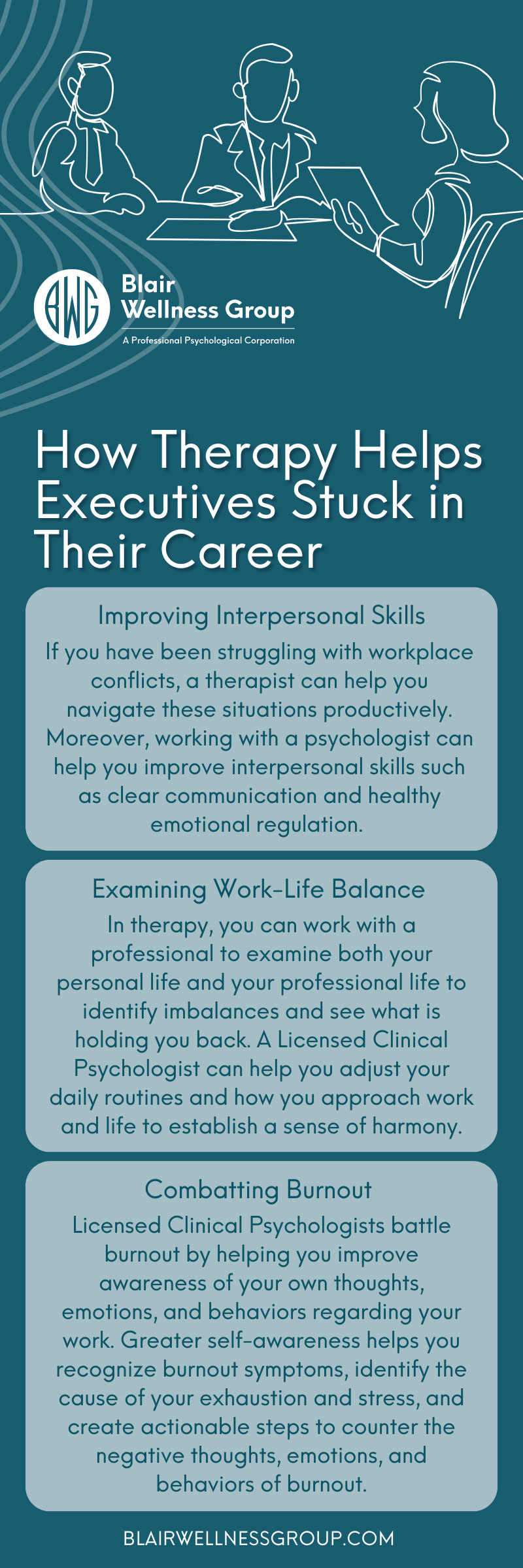
If you have been struggling with workplace conflicts, a therapist can help you navigate these situations productively. Moreover, working with a psychologist can help you improve interpersonal skills such as clear communication and healthy emotional regulation. With these tools, you can build and maintain strong workplace relationships that will continue to serve you throughout your career.
Examining Work-Life Balance
If you feel stuck in your career, the problem might lie in your work-life balance. Your personal and professional lives are intertwined; what affects one side will also affect the other. This connection can make it difficult to pinpoint the source of conflict.
In therapy, you can work with a professional to examine both your personal life and your professional life to identify imbalances and see what is holding you back. A Licensed Clinical Psychologist can help you adjust your daily routines and how you approach work and life to establish a sense of harmony.
Combatting Burnout
Poor work-life balance and ongoing work stress can lead to burnout, which is a long-term issue leading to emotional and physical exhaustion, poor work performance, and cynicism about what you do. Burnout can turn a dream career into a bitter chore. If you feel overwhelmed, underappreciated, and unmotivated at work, burnout might be the cause.
Licensed Clinical Psychologists battle burnout by helping you improve awareness of your own thoughts, emotions, and behaviors regarding your work. Greater self-awareness helps you recognize burnout symptoms, identify the cause of your exhaustion and stress, and create actionable steps to counter the negative thoughts, emotions, and behaviors of burnout.
Navigating Mental Health in the Workplace
Sometimes, career problems stem from separate Mental Health Disorders. Conditions such as Anxiety Disorders, Depressive Disorders, PTSD, or Addiction Disorders can significantly impact your job performance. Emotional and physical symptoms of these disorders can make it hard to stay productive—or even show up at all. Mental Health Disorders can also negatively affect communication, stress management, emotional regulation, and other key career skills.
Mental Health Disorders affect your professional life even if you do not realize it. That is why working with a Licensed Clinical Psychologist is so important. Through evidence-based therapies, you can identify and treat your Mental Health Disorder as the source of your work challenges. By tackling the problem at its root, you can regain productivity, fulfillment, and success in your career.
Establish Actionable Goals
Making significant changes in your career means coming up with effective goals. This action requires more than just listing things you want to achieve. Therapy can help you create relevant, achievable goals as well as actionable steps to accomplish them. These steps help you develop a career plan that you can actually follow through with to fix the issues you currently face in your professional life.
Common Therapies for Executives
No matter what factors are holding you back in your career, therapy can help. Whether you are building skills to better handle job challenges or creating goals for long-term change, working with a Licensed Clinical Psychologist helps you tackle work stress and enjoy a more productive and satisfying work life. Below are just a few examples of therapies that help executives who feel stuck in their careers.
Cognitive Behavioral Therapy (CBT)
Cognitive Behavioral Therapy helps clients replace negative thought patterns with positive ones. In the context of your work and career, CBT can help you let go of self-destructive thoughts and behaviors and instead build up realistic, encouraging thought patterns.
Acceptance and Commitment Therapy (ACT)
Like CBT, Acceptance and Commitment Therapy involves facing inner thoughts and feelings. ACT teaches clients to embrace difficult emotions and thought patterns so that they can accept them. Instead of continuing to live with the stress and negativity of destructive thoughts, ACT helps normalize those difficult feelings so that they become less destructive by nature.
Interpersonal Therapy
Interpersonal Therapy helps clients manage the thoughts, emotions, and behaviors that affect others on a daily basis. This form of treatment can help you address the challenges you face in both personal and professional relationships. It also helps strengthen interpersonal skills such as communication and conflict resolution.
Improve Your Career With Blair Wellness Group
You do not have to overcome the challenges you face in your career on your own. When you choose the therapy or life coaching services at Blair Wellness Group, you work with dedicated professionals who will help you find greater success in your professional life. Learn more about our C-suite executive coaching services when you visit Blair Wellness Group today.