
Anxiety is not always easy to identify. Many people with Anxiety Disorders feel like they are experiencing general feelings of stress and worry rather than a Mental Health Disorder. They might think that their symptoms are not really that bad, or that the problem will pass on its own over time.
This is particularly true for Generalized Anxiety Disorders. That is why it is important to learn more about what Generalized Anxiety is, where it comes from, and how it affects people. When you can identify an Anxiety Disorder for what it really is, you can seek the help you deserve to overcome symptoms and protect your mental, emotional, and physical well-being. Read on to explore some facts to know about Generalized Anxiety Disorder.
It Is More Common Than You Think
Anxiety Disorders are the most common Mental Health Disorders among adults living in the United States. Yet the majority of people with Generalized Anxiety or another Anxiety Disorder do not seek professional treatment. Why is this?
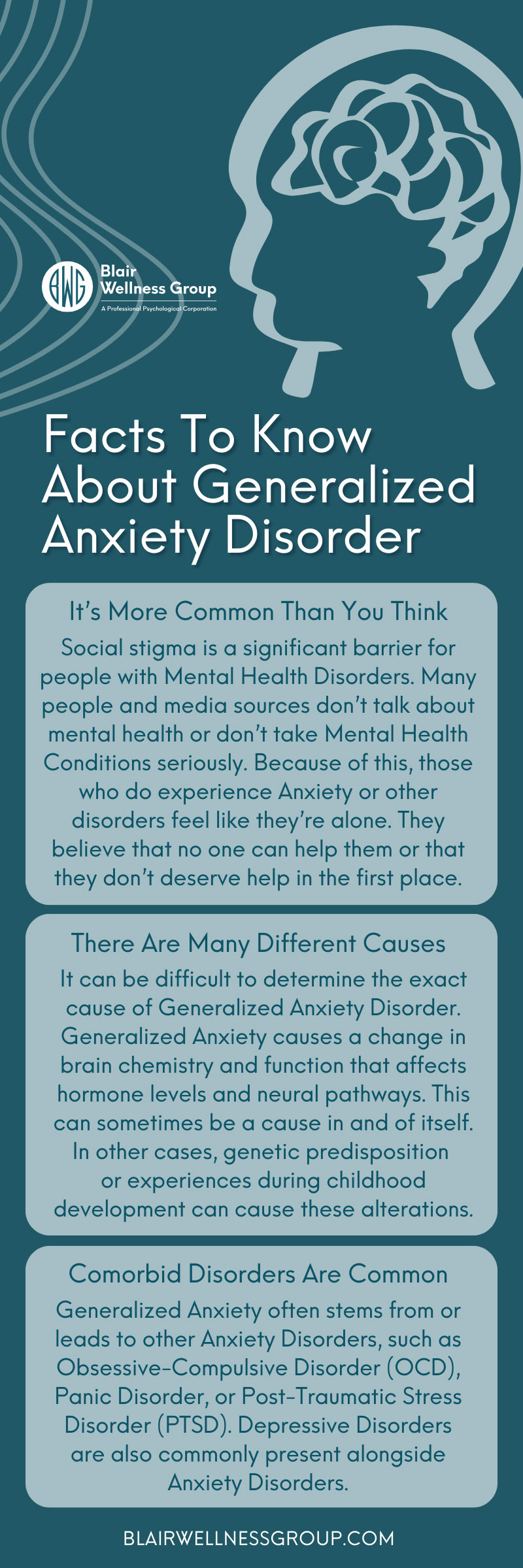
Social stigma is a significant barrier for people with Mental Health Disorders. Many people and media sources do not talk about mental health or do not take Mental Health Conditions seriously. Because of this, those who do experience Anxiety or other disorders feel like they are alone. They believe that no one can help them or that they do not deserve help in the first place.
Battling mental health stigma is difficult, but treatment is invaluable for individuals with Generalized Anxiety Disorder. In addition to helping you overcome the symptoms of Anxiety to improve your mental health, professional treatment lets you know that you are not alone in your experiences.
Generalized Anxiety vs. Other Anxiety Disorders
Generalized Anxiety Disorder shares many similarities with other types of Anxiety Disorders, but it is its own distinct condition. While other Anxiety Disorders revolve around more specific causes or experiences—such as Social Anxiety revolving around social situations or PTSD revolving around past traumatic events—Generalized Anxiety is exactly what the name suggests.
There is no specific, identifiable cause or source of worry associated with a Generalized Anxiety Disorder, which often means that you feel persistently anxious about multiple things at the same time. For example, anyone would feel worried about an ongoing health problem. You might dread going to the doctor or fear what kind of test results you are going to receive. These are normal concerns that happen to anyone. But someone with Generalized Anxiety Disorder might experience debilitating anxiety about their health even when there is no specific issue. They might also be simultaneously stressed about their career, family or relationship issues, and other things that they cannot even name or discuss.
Anxiety Is Not The Only Symptom
Persistent feelings of anxiety, worry, and dread are all indicators that you might have Generalized Anxiety Disorder, but they are not the only symptoms to watch for. Generalized Anxiety Disorder shares many mental, emotional, and physical symptoms with other Anxiety Disorders.
It is important to keep in mind that every case is different; no two people with Generalized Anxiety experience their symptoms in exactly the same way. These symptoms can also change or vary in intensity over time.
Mental and Emotional Symptoms
Overthinking is one of the most prominent mental symptoms of Generalized Anxiety Disorder. Many people with Generalized Anxiety spend a lot of time fretting over worst-case scenarios, coming up with plans and solutions for problems that do not exist, and worrying a disproportionate amount about various events and problems. It is also common for people with Generalized Anxiety to see threats or problems where there are not any.
Indecisiveness and a struggle to deal with uncertainty are common for individuals with Generalized Anxiety. It can also be difficult to let go of worries, even if you know logically that things are fine. This, in turn, leads to feeling restless and on edge.
Physical Symptoms
There are also many physical symptoms of Generalized Anxiety Disorder. These symptoms can arise during specific moments when your anxiety becomes overwhelming, or they can exist on a daily basis and turn into chronic issues. Some common physical symptoms include:
- Fatigue
- Insomnia
- Headaches
- Stomachaches
- Muscle aches and muscle tension
- Shakiness or twitchiness, often due to restlessness
- Nervousness and jumpiness
- Sweating
- Dizziness or lightheadedness
- Difficulty breathing
- Nausea
- Diarrhea, irritable bowel syndrome, and other digestive issues
There Are Many Different Causes
It can be difficult to determine the exact cause of Generalized Anxiety Disorder. Generalized Anxiety causes a change in brain chemistry and function that affects hormone levels and neural pathways. This can sometimes be a cause in and of itself. In other cases, genetic predisposition or experiences during childhood development can cause these alterations.
Personality also plays a role in Generalized Anxiety Disorder. Individuals with more timid, pessimistic, or self-deprecating personalities are more prone to developing Generalized Anxiety. However, it is unclear if these temperaments cause changes in brain chemistry or if it is the other way around.
Comorbid Disorders Are Common
Comorbid disorders are Mental Health Disorders that develop together, making it hard to tell where one condition ends and another begins. You cannot treat one disorder without treating the other, so it is important to understand the common comorbid disorders associated with Generalized Anxiety Disorder and how they can affect your mental health.
Generalized Anxiety often stems from or leads to other Anxiety Disorders, such as Obsessive-Compulsive Disorder (OCD), Panic Disorder, or Post-Traumatic Stress Disorder (PTSD). Depressive Disorders are also commonly present alongside Anxiety Disorders.
Generalized Anxiety Disorder Is Treatable
One of the most important facts to know about Generalized Anxiety Disorder is that it is treatable. By working with a Licensed Clinical Psychologist, you can overcome your symptoms, correct negative thought patterns that create anxiety spirals, and build a more positive and resilient mentality to improve your mental health.
Licensed Clinical Psychologists use a variety of evidence-based therapies to help their clients heal from their Generalized Anxiety Disorder. These treatments can include Cognitive Behavioral Treatment, Dialectical Behavior Treatment, Acceptance and Commitment Therapy, Crisis Intervention Treatment, Interpersonal Treatment, Psychodynamic Therapy, and more. By combining different therapies into a personalized treatment plan, Licensed Clinical Psychologists can address and treat your specific symptoms and experiences with Generalized Anxiety.
At Blair Wellness Group, we know how Anxiety Disorders can take over your life. It does not have to be this way, though. Our Anxiety treatment services offer comprehensive and compassionate concierge-style care for individuals with Generalized Anxiety or other Anxiety Disorders. Find the help you deserve and start your journey toward better mental health when you reach out to Blair Wellness Group today.